Pages

Showing posts with label Great Dixter. Show all posts

31 July 2018

Threat of Giant Hogweed Invasion Found to be Giant Hogwash

First, a story:

When I was gardening at Great Dixter some years ago, I met one of the bad boys of the plant world: Giant Hogweed. I remember the encounter quite well, particularly because of Fergus's stern admonition as to what might happen if we didn't heed his warnings about how to approach it. While Giant Hogweed looks pretty and impressive, this plant's sap can cause severe burns on exposed skin and if it gets in your eyes, well, it's bad. Really bad. Like, go to the hospital and probably should learn Braille, bad.

So there we were, the four of us, charged with the task of ridding the garden of a particularly large specimen. The reason I remember this so clearly is because three of us took precaution to the next level with tall boots and long socks, long trousers, long sleeves, heavy gloves, goggles, hats, and bandannas over our faces. We looked like a crew of botanical outlaws! All but the French intern, who took up the machete with a glint in her eye and started slashing the thug to bits, wearing only trainers with short socks, running shorts, and a tank top. Amazingly, she suffered no harm and together we vanquished the enemy, reducing its 12' height and about 8' width into several sturdy garbage bags. 

So when the sensational news recently came out about the state of Virginia being invaded by a whole colony of Audrey-like marauding Giant Hogweed, I noticed because I live here now. Since I had lived to tell the tale of my English encounter with the weed, I really didn't see what the big deal was but the news made it all the way across the country and I started receiving concerned emails from friends in California. Surely an authority in the plant world would come forth and set the record straight but it took several days of hearing about it on the radio and seeing it plastered all over the internet and social media before anyone did.

My favorite headline was from the New York Times, cheekily borrowing that soothing phrase from The Hitchhiker's Guide to the Galaxy, 'Don't Panic!' after warning of burns and blindness.

So what is this pestilential plant and should you be worried about it? The short answer is no, but let's start with properly identifying it and how to deal with it, if found.


A poster warning of the harmful effects of exposure to Giant Hogweed sap.
New York State Department of Environmental Conservation


Plant names often contain hints as to a plant's physical characteristics and Giant Hogweed is just that - giant. It can reach 15' in height and the leaves can be upwards of 5' wide with stems up to 4" in diameter. To say it has presence is an understatement and so isn't something you're likely to accidentally brush against on a hike. You'd really have to blunder into it in a big way. The airy white flowers form an umbel (same root word as 'umbrella') which reveal its relation to the carrot family (which also includes the common culinary herbs parsley, fennel, anise, celery, coriander, cumin, and dill) but please don't try to eat it! 

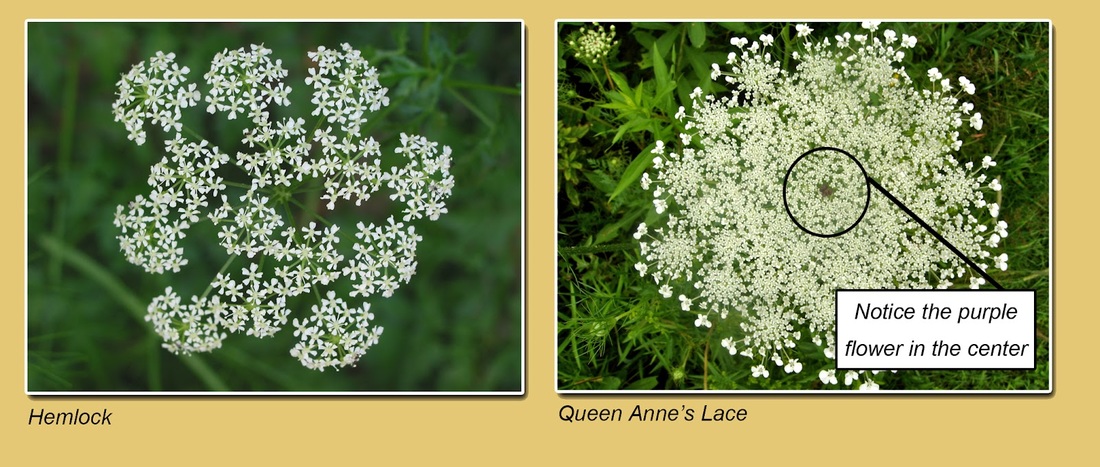
Since it seems so easy to identify, why all the sensationalism? There are several other plants in the same family here on the east coast that may be mistaken for the Giant Hogweed and since some can cause adverse reactions through touch or ingestion, it's important to know the difference. Here in NoVA a more diminutive cousin, Queen Anne's Lace (Daucus carota), is a common and prolific wildflower; however, another cousin, Poison Hemlock (Conium maculatum), also grows in this region. I made it my personal mission to be able to identify them when a former employee kept insisting that the Queen Anne's Lace in the garden was in fact Poison Hemlock and nothing I said or showed him could convince him otherwise. My conclusion: he was not a person I wanted to be stuck in a forest with having to forage for food because he would surely kill us.

But I digress.

Instead of plodding through all the plants to avoid, it seems easier to me to identify the one that's safe, or least likely to eat you alive. Anything else that looks similar but doesn't display the same characteristics probably should be avoided. At best, one should use common sense and proper PPE (personal protective equipment) when dealing with this family if you don't know precisely who you're dealing with.

Daucus carota, commonly known as Queen Anne's Lace or wild carrot, is an herbaceous biennial that grows about 3' tall. The stems are green, rough, hairy, and solid when cut. The small white flowers form a dense umbel (there's that word again) with a purple flower in the center.

An umbel of Queen Anne's Lace in full flower. Notice the purple flower in the center. Notice also that I'm touching the stem with no glove on. Some people may experience an irritating reaction from the hairy stem, and those who are photosensitive may get blisters from exposure to the sap.

A Queen Anne's Lace umbel in profile. The stems are hairy and completely green, with no blotches of color.
  
The solid core of a cut stem of Queen Anne's Lace.

Meet 'Dara', a colorful ornamental variety of Daucus carota. She still sports a darker purple center.

To me, the most immediate way of telling the wild carrot apart from Poison Hemlock is to cut it. If the stem is hollow, step away. After all, this is the plant that killed Socrates. Unlike the Queen, Poison Hemlock grows taller, has smooth stems with purple blotches, the umbel isn't as dense and the purple center is conspicuously absent.
Picture
http://bcpoultryhobbyfarmingnetwork.weebly.com/know-your-plants.html

For those in the know, neither Queen Anne's Lace or Poison Hemlock can be confused with Giant Hogweed, seeing as it's so much bigger than either of them. That's why it's handy, not to say important, to Know. Your. Plants. As Marie Curie once said, "Nothing in life is to be feared, it is only to be understood. Now is the time to understand more, so that we may fear less". Knowing what Giant Hogweed is in the first place, and understanding how to deal with it in the second, means you shouldn't have anything to fear. I don't for those reasons, and because I had a good teacher who didn't just send a bunch of novices to deal with a dangerous plant without properly arming us first. 

So what should you do if you think you spot one? First of all, Don't Panic! And don't touch* it if you're not sure what it is. Take a few photos of the leaf, stem, and flowers and send them to your local Cooperative Extension agent. This guide from VA Tech has a table showing the differences between several similar plants that are often confused and this handy media advisory, which also says to not panic and indicates that the population isn't spreading and there's really nothing much to worry about after all, provides more information on how to report it if you think you've spotted it. 

So, forewarned is forearmed and understanding eliminates fear. If that doesn't convince you and all the Giant Hogweed hullabaloo still gives you nightmares, just remember:


*Giant Hogweed sap is phototoxic and causes severe skin inflammation when contacted skin is exposed to UV rays. If contact is suspected, get out of the sun and thoroughly wash affected area with soap and water. If irritation persists, consult a physician. If it gets in your eyes, rinse immediately with clean water and seek medical attention.

01 May 2017

May

"The very word May, short and direct, seems full of light and ready to become airborne. Man compares himself with the world around him, with the birds shouting their songs, the trees bursting into leaf; old or young, in imagination or in fact, he feels himself a part of this great creative impulse."

Christopher Lloyd in Christopher Lloyd's Gardening Year

17 July 2014

A Gardener's Garden

Every gardener has a favorite garden. Or two, or twelve. And every gardener I've ever met knows a garden - a gardener's garden - that inspires them, that speaks to their soul, and leaves them with a renewed passion for their profession every time they visit. Whether it's the design, the designer, the plants, the architecture, the artistry, the history, or all the above, there is something about it that resonates. This is mine:

The Gardener’s Garden: Great Dixter on Nowness.com

21 April 2014

Tools of the Trade

I belong to several plant-geek groups on social media and enjoy the exchange of ideas and questions in all of them. Today someone posted a question about an advertised tool used in pricking out seedlings. The question was whether anyone had used it and was it worth the $5.50 asking price (plus shipping and handling). Pricking out was my favorite nursery job at Great Dixter so when I saw that post, I immediately thought of my favorite gardening tools:
 
My favorite garden tools: a notebook, a pen, dibblers

When most people talk about favorite gardening tools, the first things that usually come to mind are pruners, or favorite gloves, or apparel. Not me. My favorite garden tools are a notebook, a pen, and two dibblers (that's the technical term for the thing you use to prick out plants. Try saying it ten times fast with a straight face, go on!).

One of my dibblers is a length of branch, about 1/4" in diameter. It's got a slight yet somewhat menacing curve and the narrow end has been shaped to a point by a pen knife. The cut end has also been shaped but is more rounded. Days and hours of handling, stabbing, and grinding into potting soil has polished the dibber to a smoothness that almost feels soft so it doesn't scratch my hand, a definite plus since I rarely wear gloves while gardening, and especially not while handling small and delicate seedlings. It may be just a piece of twig, but I counted it among my most essential tools while working in the nursery. Cost: free, with a little elbow grease.


Another dibbler that I've used in the garden only on special occasions is this hand turned beauty. It's about the length of a pencil, made from the wood of a white cherry tree felled at Castle Fraser in Scotland. I can tell you this with absolute certainty because the craftsman who made it told me so, chips flying off the whirling branch as it spun in his lathe. Some years ago I spent a week participating in a working holiday with the Scottish National Trust at Pitmedden Garden, picking apples and preparing for their annual festival which included traditional farm life demonstrations by various craftsmen. I got to chatting with a talented woodworker and when I told him I was a gardener, he said, "Och! You'll be needing a dibbler, then!" and set about making this for me. It's a beautiful honey blonde color, polished to silky smoothness by fine sandpaper and a bit of bee's wax. The thistle on the end was only fitting, given the tool's parentage.  During the festival I was stationed in the historic farm house making traditional oat cakes over a wood-burning stove so he also made me a sycamore rolling pin to roll the cakes with.

Hand turned dibbler, white cherry wood, with Scottish thistle embellishment


While at Great Dixter I befriended another woodworker who taught me a thing or two and let me turn my own chestnut mallet. Sure, manufactured synthetic tools are handy and might last a long time, but there's something about using nature's bounty to craft your own tools. Unlike injection molded plastic or metal, these handmade tools are part of a natural cycle of growth, use, and decay that won't harm the environment. When they've outlived their usefulness, throw them on the compost heap and make a new one. Cost: free. Value: intrinsic and highly sentimental.

By far my most indispensable garden tool is a notebook. I've always been a habitual note-taker anyway but while I was at Dixter, Fergus so ingrained the importance of recording observations in the garden that I never went to work without a notebook and pen in my back pocket. Christopher Lloyd always carried one, and the Alwych book was his brand of choice. This one was a birthday present from the staff at Dixter. It's got an 'all weather cover' so it will withstand some rain or occasional dropping in puddles but there are notebooks with waterproof paper specifically made for outdoor use if you're working in the wet.


Personally, I make no secret of being a Moleskine addict and for use in the garden prefer the pocket size soft cover notebooks which come in a rainbow of cheerful colors. They're available with blank, lined, or quad ruled pages. I like blank pages, because doodles and sketches are an important method of observing and recording the garden. They're not weather proof, though, so I usually have a collection of both weather proof and non-weather proof to choose from, depending on the daily forecast. I regularly go back and look through my notebooks to remind myself of thoughts and ideas for the garden, or to recall the name of a particular plant I saw used in a new and creative way. Lately I've been watching The Tudors and when a lawyer came to The Tower to remove a condemned Sir Thomas More's books, papers, and quills, I honestly felt his pain at their loss. Cost: varies. Value: priceless.

My doodle of a border combination seen in the garden at Wave Hill
The last tool I rarely enter the garden without is the one I used to take these photos. A camera is indispensable for recording changes in the garden and capturing images in gardens you visit but while a camera will capture an instant in time, it won't record the scents and sounds around you, how a place a makes you feel, or record notes for future improvements or ideas. Also, batteries die, and then what do you do? You pull out your trusty notebook, of course!

Whatever your trade, there are tools that define it. What's your favorite?

15 March 2014

Five Minutes of Garden Fame

I'm quite chuffed, as my English friends would say, to be featured in garden writer Helen Yoest's blog! She's been doing a wonderful series of profiles highlighting young garden talent, an idea she got from a similar series featured in Gardens Illustrated. I had the honor of working along side several of the gardeners featured in the GI profiles and, because youth is a state of mind, am thrilled to be in company with so many talented gardeners in Helen's series. I've copied her post here for your reading enjoyment and took the liberty of adding some links for people and places I mention because I love them so and want to share them with you! To see the original post and more fantastic content from Helen, give a click on her blog link below. Do drop in and have a look around. While you're there, tell her Debs sent you!

Garden Talent: Deb Wiles

Posted by on March 13, 2014
Meet Deb Wiles. Deb, thanks for sharing with Gardening with Confidence! And thank you for all you do!
 
Please visit the Gardeners going forward category (on this blog) for other interviews of bright young minds.
 
Deb Wiles
Name: Deb Wiles
Age: 45 on the outside, 25 on the inside

Occupation: Director of Horticulture, Garden Historian

Where you went to college:
California State University Northridge (BA Deaf Studies), UCLA (Horticulture and some Landscape Architecture), University of Greenwich, London (MA Garden History), and I was a Professional Gardener student at Longwood Gardens.

What is your earliest garden memory?
My earliest garden memory is of pinching the seed heads on Oxalis in my grandparent’s garden. I was probably 5 and didn’t realize they were weeds! I just liked how it tickled when the pods exploded between my fingers! We also had a Passiflora vine in our backyard that was annually covered with Gulf Fritillary caterpillars which then made their chrysalides all over the fences and walls of the house. Kind of eery but when the butterflies emerged it was magical! That was the first time I made the connection between a plant and an insect.

What made you decide to enter the field of horticulture?
I was a cubicle rat in a windowless office for years. On the weekends I spent all my time at a local nursery called Hortus, taking classes and drooling over the plants. One day I overheard the owner telling another customer about the landscape architecture program at UCLA and my company had a tuition reimbursement program! The rest is history!

Please tell me about your specific horticultural position?
I’m Director of Horticulture for an historic estate turned public arboretum. Right now that means I shovel a lot of snow! There are only two of us on the hort staff to manage 13.5 acres of formal gardens, wildflower meadow, and woodlands so my job is very hands-on. I also have the dubious distinction of successfully organizing the first ever deer hunt on the grounds (and I’ve only been there 6 months!). I write the monthly garden tips article on the company website, teach classes and workshops, write grant proposals, and launched the Arb into social media. Currently I’m helping to develop our first garden docent training program.

How long have you been in the horticulture business?
Unofficially, about 15 years. Officially, not quite 10.

What is your personal garden style?
I studied the gardens of the late 17th and early 18th century for my MA and really love the calmness that order and geometry bring but my own personal style is very haphazard. When I had a garden of my own, I would wander the nursery and grab whatever was new or unique or a plant I’d seen on my travels just to see if it would work in my garden, so it was quite varied! Luckily my landlord didn’t mind the experiment!

Tell me about your first plant love?
I try to be an equal opportunity plant geek but I would have to say Sweet Pea since that’s my birth flower. The blossoms are so elegant yet playful, and the scent! I’d fill my house with them if I could!

Who inspired you in your career and how?
Oooh, lots of people: Gary Jones, who owned Hortus; Scott Daigre and Catherine Downes, who worked there as well as fellow Hortus devotee Susan Drews; my colleagues in the windowless cubicle who cried, “Take me with you!” when I left; Fergus Garrett, head gardener at Great Dixter, who I met for the first time in 2006 and whom I am honored to call friend and mentor, and pretty much everyone I met while I was at Longwood! And, of course, my parents.

What is your favorite garden setting?
I love a garden with a broad view across a body of water, with a seat to enjoy it on, lots of heavenly scents carried on soft breezes, sunshine, shade, something to explore, and something to discover. A cafe with tea and scones doesn’t hurt!

What is your favorite planting style?
Right now I’m into what William Robinson called the Wild Garden.

What advice can you give others considering entering the field of horticulture?
DO IT!!! I took a drastic cut in pay when I left my high-powered corporate job to work in the garden and have never regretted a moment of it! Yes, it was a scary move, especially since it’s technically my third career, but I’ve made the best friends, have seen the most amazing places, met the most remarkable people, and have learned more than I ever imagined. If it’s where your heart is, go there. You won’t be happy until you do!

If you could go anywhere to see gardens, where would that be?
I’m not finished with the UK yet!

If you could go with any one person, who would it be?
Celia Fiennes (1662-1741). This woman traveled to every county in England between 1685 and 1710, an accomplishment very few men could claim at the time. She kept a travel diary describing the gardens and interiors of the great houses she visited as well as the local trades and commerce. Not much is known about her apart from her diary and her family connections so I’ve started researching her biography and hope to retrace her journeys one day.

What was your most valuable training?
Longwood introduced me to the world of public horticulture on a bold scale and Great Dixter introduced me to a world of wonder and historical reverence! Both were invaluable in preparing me for my present position.
How can people contact you: email, fb, LinkedIn, Twitter, website, etc.?
debwiles@gmail.com
Facebook: Deb Wiles
Twitter: @dawiles
Blog: gotsoil.blogspot.com

Helen Yoest

20 December 2013

5-10-5

I love reading interviews with gardeners. Being in the gardening world, as I am, and visiting so many amazing gardens, I always find myself wondering about the gardeners behind them: Where do they find their inspiration?  What training have they had and from where? Why did they use a particular technique? What was their favorite tool? and If I asked nicely would they give me a cutting of that plant!?

One gardener who constantly inspires me is Jimmy McGrath, who is partly responsible for the path my own gardening life has taken in recent years. It was through him and his Longwood classmate, Mark, that I learned about the PG Program there. After Longwood Jimmy went to Great Dixter, where I met him one unusually snowy April morning. He went on to the Jerusalem Botanic Garden, then spent time gardening at DeWiersse in Holland. After a brief return to the States, Jimmy and his other half set off for England and I was able to reconnect with him there, chatting and catching up next to the colored fountains playing in the park next to Marble Arch that reminded us of the fountain terrace at Longwood. While in London, Jimmy worked on the fantastic landscape scenes featured in the Olympics opening ceremony - a once in a lifetime dream job! Then he was off to garden at Gravetye Manor, with the colors, forms, and textures of William Robinson's wild garden buffeting him with inspiration. Jimmy is a gifted artist and I always love when he posts his drawings on his blog, wishing I had the discipline to develop my own artistic ability more. Now he's gardening in Spain, enjoying the warm Mediterranean climate while I shiver through a cryogenic north east winter!
I have such admiration for Jimmy so I was truly surprised when he asked to interview me for a new blog that he and a friend here in the States were setting up. Me? Really? Aw, shucks! I don't know why I still find myself surprised by the way own garden path has meandered, and am constantly in awe of the company in which I find myself. Gardeners truly are remarkable people! So grab a cup of tea and go visit Jimmy's blog. There you will find beauty, art, horticulture, and inspiration.
Thanks, Jimmy! I'm proud to call you friend!

22 January 2013

I'll be able to say, 'I knew her when'...

Every once in a while I amuse myself by looking at the stats on my blog. This week saw more hits from UK audiences than anywhere else (though there were an equal number of hits from France, Taiwan and Russia!). It makes me wonder if the increase of the UK audience is due to the latest issue of Gardens Illustrated in which my friend Rachael is profiled as one of the up-and-coming garden talents. Rachael, it's all your fault!

Rachael and I met at Great Dixter on a cold, wet spring day a few years ago. I was starting a six-month internship and she was part of a student volunteer group there for the weekend. We sat around the fire after dinner drinking wine and laughing and got on famously. Must be our common heritage, though mine is less immediate than hers, being separated by several generations and a large body of water. She paid me the great compliment of saying I was "so British - in an American sort of way" and has since become one of my favorite people in the world. She is indeed talented, in more ways than gardening, and a gorgeous soul which comes through in her gorgeous photo, I think. And she likes my blog. I would still love her if she didn't, but she does, and she mentioned it in her interview which humbles me greatly.

So for those of you who found me because of Rachael - welcome, and I hope you like it here as much as she does! And thanks to our mutual friend Emma who sent me the page from the magazine. I wouldn't have known if she hadn't because the local bookseller is lame and doesn't carry Gardens Illustrated. Luckily I have a friend saving this issue for me. Time to renew my subscription, I think.


Bravo, Rach! And thank you! 

07 September 2012

Great Barn Restoration at Great Dixter

As any garden designer knows, the composition of a garden is more than just plants. There are other elements to consider: water, the form of the land, climate, paving, and buildings. In the not-too-distant past gardens were designed around structures from which the garden could be viewed and appreciated, the buildings and the gardens integrated into a unified whole. Without one, the other would be incomplete. Great Dixter is that kind of garden with that kind of house but it's the Great Barn that was in the spotlight last weekend.

062
The Great Barn, Great Dixter
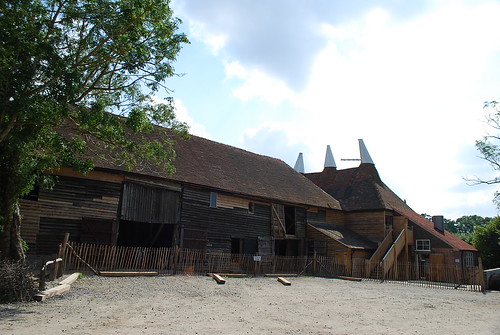
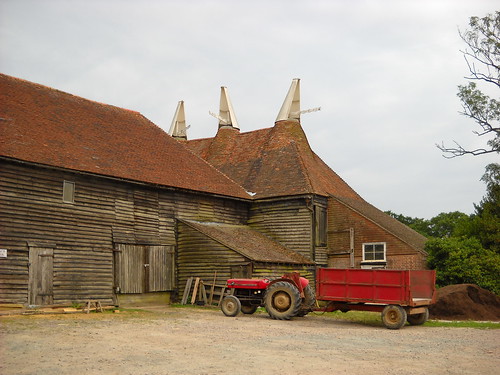
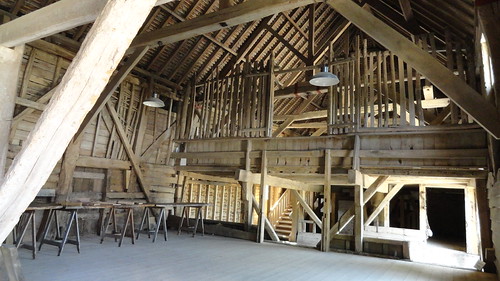
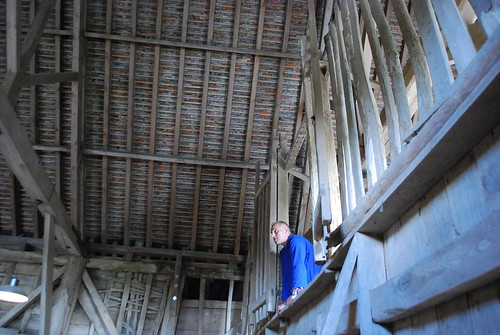
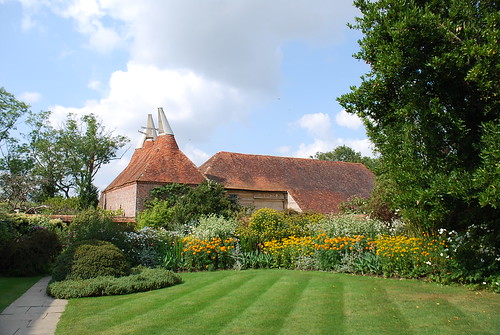
The Great Barn, with medieval timbers and triple-cowled 19th century oast house, is a massive hulk of a structure brooding over several parts of the garden. It gives the Barn Garden its name and when viewed from down in the Sunk Garden, the enormous undulating sea of roof tiles is almost imposing yet you never feel engulfed by it.
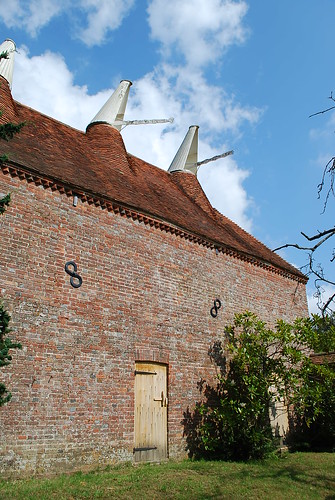
The white cowls of the Oast House pivot with the wind and are a reminder of this garden's past as a working farm. The medieval farmer who sheltered his beasts in the barn over winter and the 19th and 20th century hop workers processing the season's harvest probably wouldn't recognize the garden today, but they would know that structure without a shadow of a doubt.

082
South face of the Oast House
It's fortunate for us and for the history of the area that these buildings were preserved when the Lloyd family bought the tired estate in 1909. Edwin Lutyens designed the gardens around them - the barn, cattle troughs, hovels, bothies, cart sheds, even a pig pen, were all woven into the fabric of the garden and are integral notes in the composition. Perhaps even more fortunate was the desire by the current Trust to restore these wonderful edifices to their former glory instead of following the trend of commercial conversion to tea rooms and gift shops.

Don't get me wrong, I've been to plenty of gardens with fancy stable blocks converted to tea rooms and gift shops and, for the most part, all have been well done and they work for those gardens but covering the interior of Dixter's wonderful old barn with sheet rock and plunking in a lino service counter burdened with cakes and packaged sandwiches just isn't Dixter. Christopher Lloyd was adamant that the place not be mothballed and sealed in aspic when he died, nor that it become too commercialized or institutionalized. Head gardener and Trust CEO Fergus Garrett is determined that Christo's wishes be honored and the character of Great Dixter be respected in every aspect of managing the gardens, right down to the care of these magnificent old buildings. The world needs more like Fergus, I say.

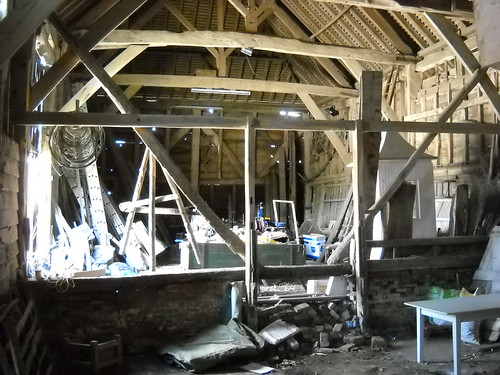
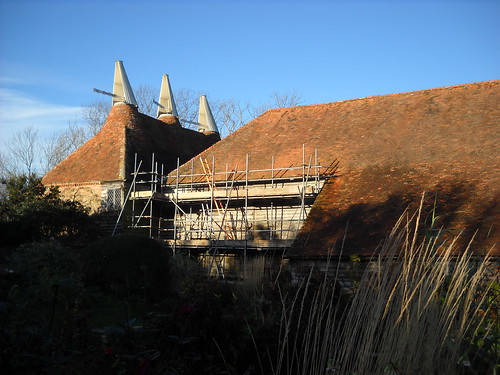
Fergus called the restoration of the barn "the icing on the cake" of a multi-million pound restoration scheme focused on the buildings that has been ongoing since Christo's death in 2006, including the acquisition of Dixter Farm down the track, which was restored and made into an education center and student accommodations. Now there's a worthy conversion for you. With a grant from the Heritage Lottery Fund and donations from friends and private contributors, the barn project began in late 2011. I was fortunate enough to be there to see it before work began, then to visit as it was ongoing, and finally to see the fabulous new restoration opened to the public.

160
Opening of the Great Barn 3 Sept 2012
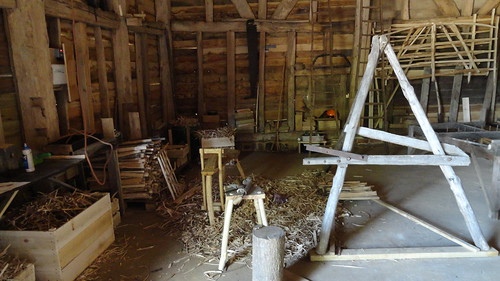
One of the things I love about Dixter is their stewardship of the land. With an eye to the future oak from the Dixter woods was harvested years ago, milled, and set out to season so it could be used in the restoration. Some was used in the house to replace rotting 15th century timbers, and as much as possible was used in the barn. The coppice woods are still managed and the poles, peasticks, twigs, etc. are all still used in the gardens. Students this year even learned how to split sweet chestnut and make ladders and hurdles, all with hand tools. In keeping with this form of management that honors the ancient traditions, an area of the barn was set up to demonstrate these hand-crafts and the products made there are put to work in the garden or made available in the shop. All using locally sourced materials, all made by traditional hand-craft, right there under the beams of the medieval barn. How cool is that!?

131
But enough talk, there are lots of pictures to see. If you're in East Sussex this autumn, a stop at Dixter is a must. The house and garden - and now great barn - are open until 28 October and believe me when I tell you there will still be plenty to see in the garden.

379
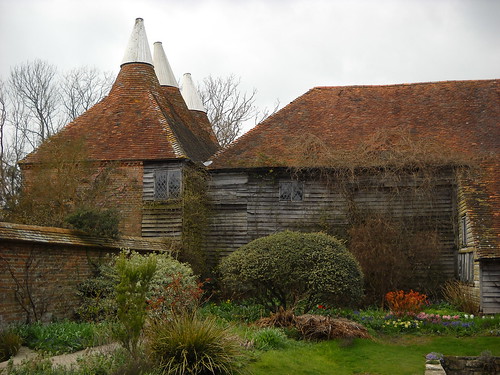
The Great Barn and Oast House in Spring 2011 before restoration began
Great Dixter 04.20.11 087
Spring 2011
135
Sept. 2012
 
Great Dixter 04.20.11 090
 
063
Brimstone would have been kept in the curved niches to feed the fire (middle door) under the drying floor
156
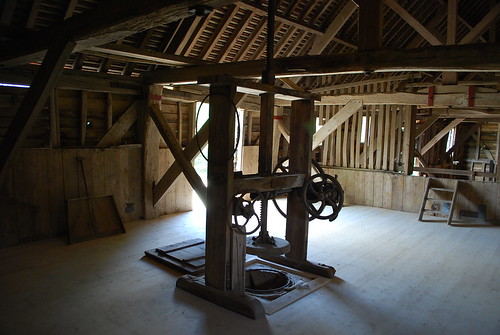
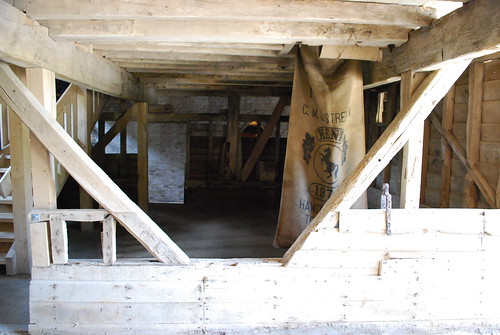
The restored hop press. Dried hops were pressed into bags hanging from below.

150

151
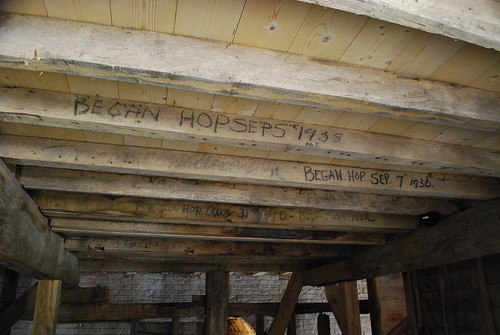
Hop workers wrote the start date of hops harvest on the joists, which have been preserved.

170
Fergus addresses the crowd on opening day 3 Sept 2012
Great Dixter 04.03.11 022
Exterior of the barn and oast before restoration, Spring 2011
Great Dixter 009
November 2011
149
September 2012, seen from the Solar Garden
282
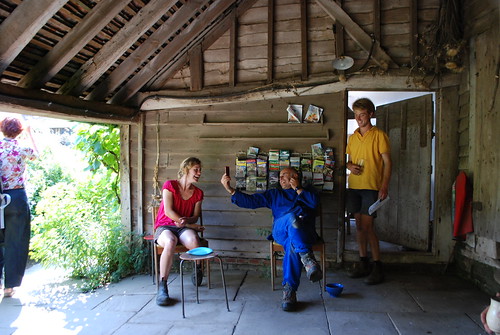
The garden side of the barn offers shelter for visitors and a mess room for the gardeners. Fergus shares a moment with Rachael and James, the first two Christopher Lloyd Scholars (notice they're all wearing primary colors. I love that!)
262
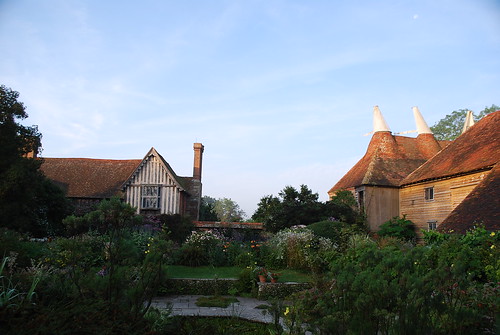
Testimonies to enduring craftsmanship and sensitive stewardship: early morning light touches the 15th century Great Hall, 19th century oast and medieval great barn with a pale setting moon (top right) smiling down. Try imagining the garden without them. 4 Sept. 2012
The garden at Great Dixter is open Tuesday - Sunday and Bank Holiday Mondays from 11-5 and the house is open from 2-5 until 28 October and will re-open 1st April. See their website for admission cost and special events and study days throughout the year.

Links to videos of the project can be found here and here. Watch them. But be warned, you just might fall in love with the place.

07 April 2011

You Have to Start Somewhere

So much has happened since we arrived at Great Dixter it's difficult to pick just one, or even two, subjects to elaborate on because, really, if I were to dive in and pull one out and tell you all about it we'd be here for days! Days, I tell you!

Like the day we accompanied our new friend James, the first Christopher Lloyd Scholar here at Dixter, to the RHS Garden Wisley and how enchanted we all were with the Alpine House. Or the day we visited Beth Chatto's garden and met Beth (how can a woman so small have so much energy?) who gave us all a hug! And speaking of energy, I could go on at great length about working with the likes of Fergus Garrett, who leaves the Energizer Bunny absolutely knackered and begging for a breather. Then there was the day we went to Sissinghurst Garden just at closing and were permitted to wander the garden at will until it was too dark to see anything. How about a magical morning walk in the woods with Dan Hinkley to view the wild daffodil in its native habitat? And I can't forget the perfect sunny Sunday that James, Emma, and I explored the public footpaths from Dixter to Bodiam Castle and enjoyed a cream tea with one of the retired volunteers there who was full of fantastic stories and wonderful information of the area.

And it's only been a month! Where shall I possibly begin?

As Fergus says, you have to start somewhere so I'll start at the beginning:

The estate of Dixter appears in the books as far back as the 1200's. That's the 13th century, or almost 800 years ago. However you look at it, Dixter's been here for a reeeeeally long time! It was owned by a succession of noble gentlemen who, in one way or another, had garnered favor with the Monarchy and accumulated varieties of titles, lands, wealth, and sons-in-law. They had interesting names but the one we're most interested in is Lloyd, which enters the record book in 1910 when the estate was purchased as a new family home for Nathaniel and Daisy Lloyd and their growing brood. By this time the original 15th century timber framed hall house - built sometime around 1450 - and the surrounding farmland had been neglected and on the market for over ten years.

The Lloyd's hired the well-know architect Edwin Lutyens to restore and enlarge the dwelling, which he did by incorporating another hall - this one much newer and somewhat humbler than the Great Hall, dating to about 1500 - the timbers of which were numbered, disassembled, transported, and reassembled at Dixter with a modern kitchen and bedroom wing joining the two timbered structures. Modern amenities such as central heat, electricity, and indoor plumbing were added as well, enabling the earth closets in use at the time to be replaced with water closets*.

Lutyens also laid out the framework of the gardens with decided input from Mr. Lloyd and it was his wife Daisy who became the first real gardener at Dixter. Of their six children only the youngest, Christopher (1921-2006) showed an inclination to gardening and it was he who made the garden famous by experimenting with plants and plant combinations then writing about them and the garden in his inimitable style. He was simultaneously a maverick and a trendsetter in the gardening world (putting pink and yellow together just wasn't done, darling!).

Dixter, under the green fingers of Daisy and Christo was really a garden ahead of its time: Daisy planted the first wildflower meadows at Dixter, which Christo expanded. Now, wildlife studies have found that the plant and insect species formerly so common in the UK have diminished in alarming degrees because of the reduction of natural meadowland. Christo's head gardener Fergus is continuing to expand the meadows at Dixter which has encouraged an increase in population of both moths and butterflies as well as the rare native meadow orchid, happily colonizing in Dixter's long grass.

Dixter has always made use of its own compost, taking the cuttings, clippings, and debris from garden and kitchen, heaping it all into massive piles and waiting patiently for nature to do its thing until the compost is ready to use in the garden. Large iron tubs in the nursery collect rain water and an underground tank collects well water run down from the high meadow, fed by gravity, for use in watering nursery plants and the plethora of pot displays in the garden.

Plants in the garden are buttressed by poles, canes, and pea sticks that come from the Dixter coppice woods or the garden itself. Everything is used that possibly can be, little is wasted, and everything that can be reused, is. This all  began 100 years ago, before such a thing as conservation was hip and before the word 'sustainability' began buzzing around like a vibrating mobile phone. Not bad for a garden that is still run the 'old way', is it?

As with any family that owns a large estate there was some drama involved in procuring Dixter after Christopher's death but it has been secured and is now run by the Great Dixter Charitable Trust while the garden is managed by Fergus Garrett and his team of amazing gardeners in the way Christo gardened. It is still seen very much as a garden going forward, not sealed in aspic to preserve it forever unchanged, and the recurring theme regarding new plants and combinations is "let's see what happens".

It's a hugely dynamic garden, celebrating just over 100 years of cultivation. It's a pretty amazing place to be and in the months to come I'll try to steal a few moments between adventures to regale you with tales and information. For now, have a look at some pretty pictures or Google 'earth closet' and see if I'm not telling you the truth!


02.26.11 068
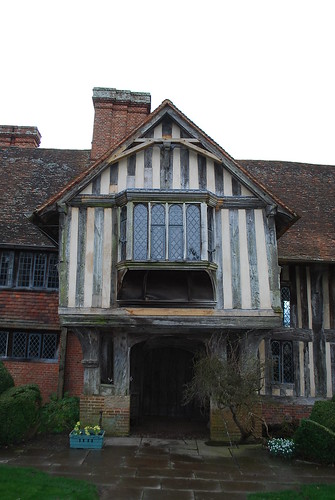
Entrance to Great Dixter - this is part of the original 1450 manor house restored by Lutyens

DSCN7274
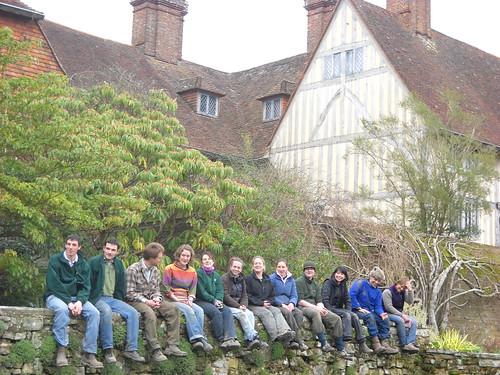
Horticulture students at Dixter for a volunteer weekend are seated on the wall of the Terrace with the imported Benenden Hall looming in the background

Great Dixter 03.11.11 156


Great Dixter 03.11.11 140
Anemone blooming in a pot display on the porch


Great Dixter 03.11.11 126
Dixter's sheep (part of the meadow management crew)


02.26.11 047
The famous Long Border in early spring

*Earth closets were invented in the 1860's by a Mr. Moule and basically constituted a commode with a pail full of earth under it. This was a major boon to housekeeping and if you believe the memoirs of certain house maids, carrying a bucket of soiled earth down to fertilize** the garden was infinitely preferable to emptying chamber pots. This invention is being renewed in light of the new "green movement" as self-composting toilets.

**Lest you utter a moue of distaste at the thought of human waste being used as fertilizer, allow me to direct you to the ingredient list of some bagged compost products. Some of them contain "bio solids", more commonly known as sewage sludge. Makes you think about what you're putting in your garden, doesn't it?

13 March 2011

Standing on the Shoulders of Giants

In forty years of prolific writing, Christopher Lloyd penned columns for the Guardian and Country Life magazine as well as an impressive number of books, never missing his weekly deadline. With inspiration coming from his garden right outside, he always had something to write about. And now here I sit at his home at Great Dixter in what I fancy was once a servant's bedroom converted to a kitchenette for students, with the same sources of inspiration at my fingertips and I'm at a complete loss as to what to write. Part of me still can't believe I'm actually here and there are no words for such a condition!

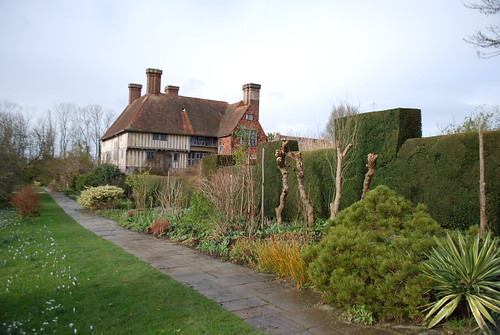
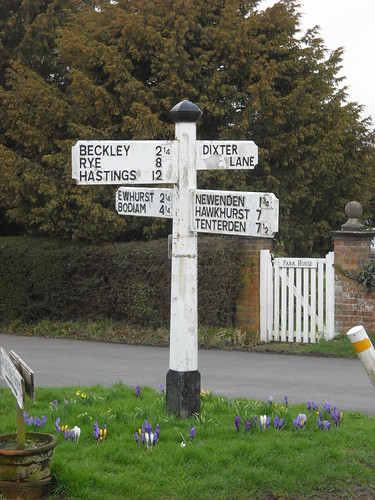
The journey from the States was smooth and uneventful, which is as good as a journey can get in my book, and we arrived in the UK early in the morning and eager to get to Dixter. We took planes, trains, and autos (in the form of a London cab) and miraculously didn't get lost! Thus, when we made our way to the south and the village of Northiam, we were greeted with several happy views.

DSCN7277

02.26.11 068

It's spring here, which is plainly evident in the profusion of naturalized Crocus blooming in the lawns and meadows, the Daphnes wafting their scents throughout the garden, and the swelling buds of fruit trees in the orchard (many of which Christo grew from seed).

We've been here two full weeks and already have had wonderful adventures: a volunteer weekend led by head gardener Fergus Garrett with students from Kew, Wisley, and Cambridge, an outing to Wisley, and this week we're due to visit Beth Chatto. Work in the garden is hard and the list of jobs to do before opening day on April 1st is long but we're getting through it. Each day is different and with each we learn several new plants, techniques, meet a new volunteer, hear new and wonderful stories, and try to keep up with Fergus's boundless energy and enthusiasm (which isn't easy, let me tell you!).

DSCN7274
Students who partook of the volunteer weekend with Fergus and staff
This is real gardening and I can't wait to chronicle our adventures here over the next six months! But now I must leave you as we have been invited to lunch with a neighbor and mustn't be late. Before I go, I'll leave you with some images of spring at Dixter!

DSCN7276
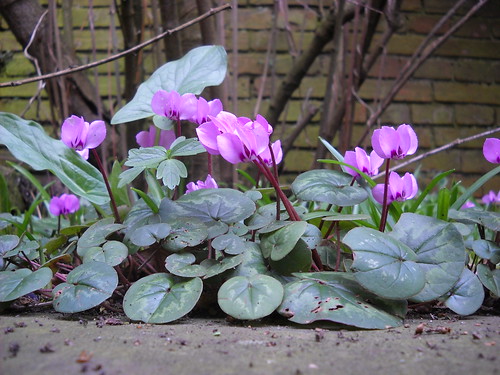
Liliputian Cyclamen in the garden

02.26.11 073
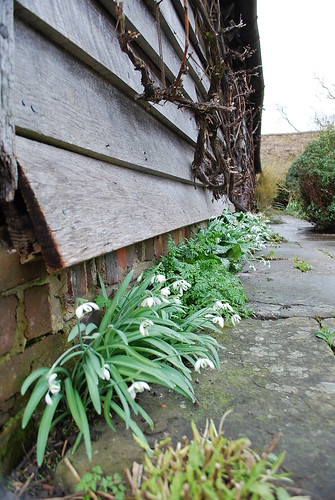
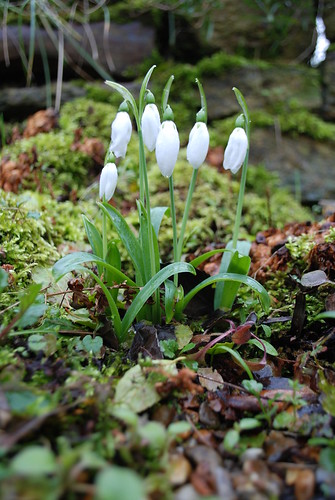
Galanthus in the Barn Garden

02.26.11 027


Great Dixter 03.11.11 156
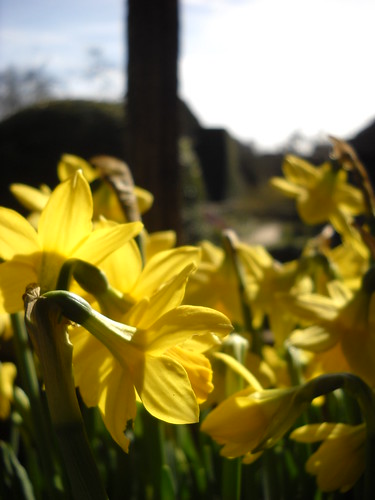
Daffodils in the Peacock Garden

Great Dixter 03.11.11 140
Potted Anemone on the porch

Great Dixter 03.11.11 138


Great Dixter 03.11.11 126
Sheep graze contentedly at sunset (heck, if I were a sheep here I'd be content, too!)